
RESDP Progress Report
April 2026


By the end of March, the Government of St Lucia (GOSL) had paid compensation to 11 out of 17 economicaly displaced farming households affected by land clearance for the Renewable Energy Sector Development Project (RESDP). These households farm a variety of crops in the communities of Belvedere and Bele Plaine, Soufriere; and Park Estate, Saltibus. Compensation to the other six (6) households wil take place during the month of April 2026.
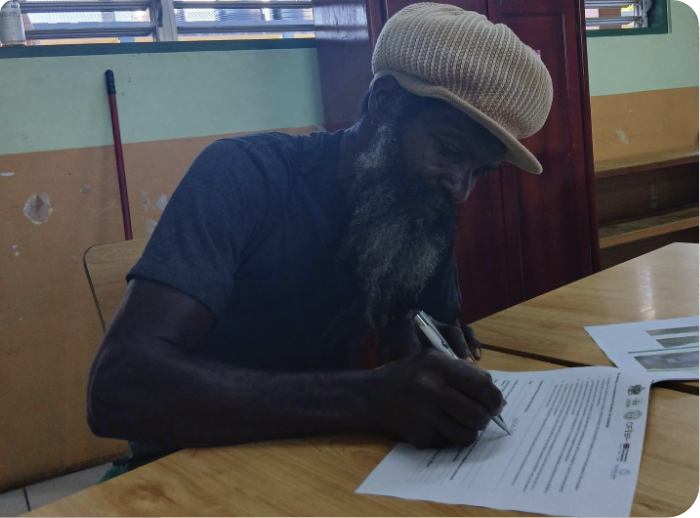
The occupied lands will be used by the GOSL to facilitate well pad development and road expansion in Belvedere; well pad development, road expansion and materials storage in Belle Plaine; and material storage in Park Estate. A total of approximately 12 acres of land is required for the project. Of this amount, 2.40 acres will be acquired through the Land Registration Act, 2.30 acres purchased through private treaty; 2.8 acres leased and the government will transfer 4.45 acres of Crown Land for project use. The project’s occupation of these lands will result in the involuntary resettlement of 17 farming households.
In order to ensure that the quality and standard of living of these affected farming households is not compromised, they are being compensated for their assets valued at the cutoff date of September 30, 2024, paid for two-years lost income and provided with farm restoration support to assist in restoring their farms after project completion. These farming households will be allowed to return to their previous farmlands after completion of the project in mid-2028.
Besides the above 17 farming households, another 104 households will be economically affected by the project. These households are owners of the lands which will be acquired by the GOSL for the project but who do not farm or reside on the land. Because these are family lands and the heirs do not yet have legal title, administrators are presently being appointed for these respective families to facilitate payment of compensation amounts for their lands.
Compensation amounts calculated at replacement cost with interest at 6% per annum will be placed in escrow for each property. This will be undertaken immediately after the Department of Infrastructure, Ports and Transport (DIPT) has received Cabinet approval for the acquisitions. This approval is presently being sought. On appointment of administrators, final compensation amount will be negotiated by each family administrator with the GOSL’s Authorised Officer. Thereafter, the agreed amount will be paid to the relevant family administrator from the escrow account for distribution to the heirs of the registered but deceased landowner.
In order to reduce the risk of negative impacts on nesting birds within the project sites and to ensure that the work proceeds in line with the Wildlife Protection Act of 1980 (as amended) bird surveys will be conducted. The specific objectives of the survey are to:
To facilitate the conduct of this activity, Terms of Reference (TOR) for the studies was developed by the Project Implementation Unit and forwarded to the World Bank (WB) for its review and approval. Recently, the WB approved the TOR for these bird surveys at the three drilling sites: Saltibus, Belle Plaine, and Fond St. Jacques; and the storage site in Parc Estate, Saltibus. This clears the way for procurement of a consultant to conduct the surveys. Procurement activities are expected to commence soon and construction and installation works as soon as the preparatory activities have been completed.
In view of houseowner concerns about the possibility of structural damage to their homes and auxiliary structures from geothermal-related civil and drilling works, the Project Implementation Unit (PIU) contracted the services of the UWI Seismic Research Centre (SRC) to monitor surface vibration during civil works, drilling operations and well testing.
During its reconnaissance earlier this year, SRC identified seven (7) locations which met their requirements for installing the relevant seismic monitoring equipment.
In February and March, the PIU successfully negotiated with six of the seven landowners for construction and temporary installation of seismic stations on their lands. Efforts are presently being made to identify the heirs of the seventh landowner.
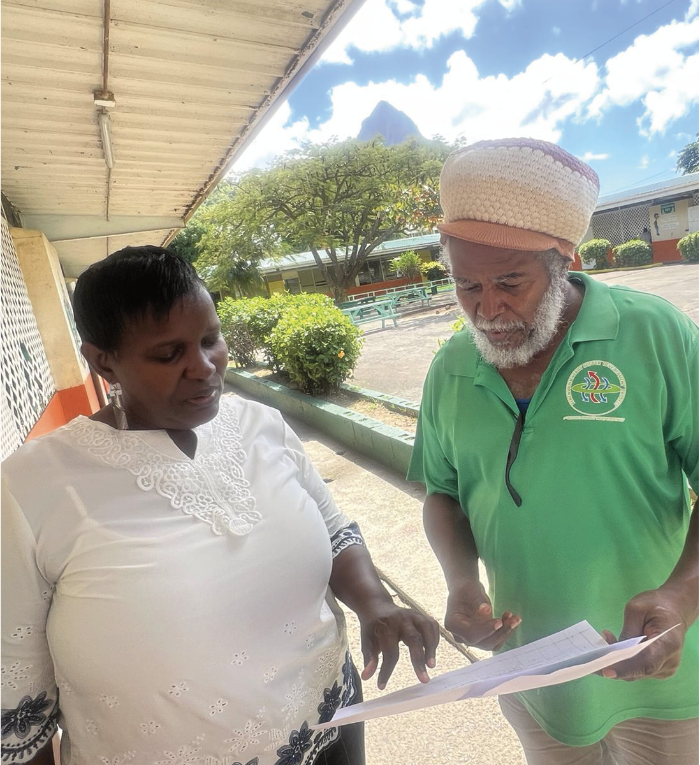
In order to legally engage and formalize the relationship with these landowners and the GOSL a Service Agreement is required. The PIU has prepared and submitted a draft of same to the Attorney General’s Chambers for review and approval.
While efforts are afoot to secure land for installing the seismic stations, SRC has ordered the equipment and made payment to the manufacturer for manufacture of the seismic monitoring equipment required for the network/system.
As part of the RESDP, the GOSL is making significant strides in modernizing the national legal and regulatory framework for clean energy. A key highlight of this initiative is the update of our draft Geothermal Resource Development Bill (2012), which aims to create a stable, home-grown energy foundation to reduce reliance on expensive imported fuels and lower electricity costs for all Saint Lucians.
This updated legislation will be designed to ensure national energy security by establishing clear rules for resource ownership and investment.
Crucially, the Bill integrates rigorous environmental and social safeguards to protect the island’s natural heritage, including the Pitons Management Area, and ensures that local communities directly benefit from geothermal development such as the introduction of "direct-use" applications like agro-processing and wellness tourism in addition to renewable energy for electricity.
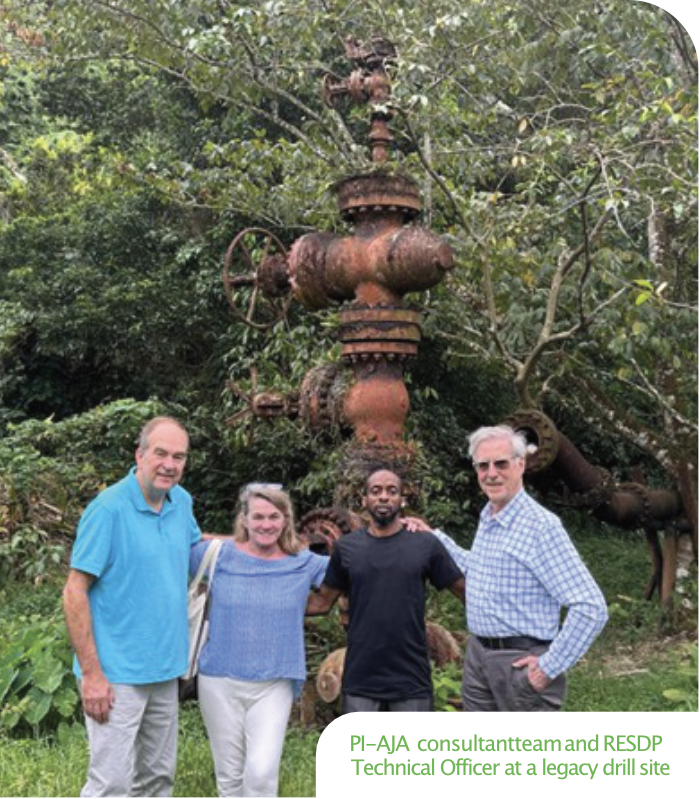
To support this transition, the OECS GEOBUILD have contracted consultants Partnership International, Inc. and Arthur John Armstrong, P.C. (PI-AJA) to serve as an advisory team. This advisory team is working closely with national stakeholders to develop drafting instructions for the Bill.
The GOSL, through the DIPT successfully concluded a critical series of stakeholder consultations aimed at shaping the nation’s Geothermal Resource Development Bill. These meetings, held in February 2026 marked a significant milestone for the RESDP.
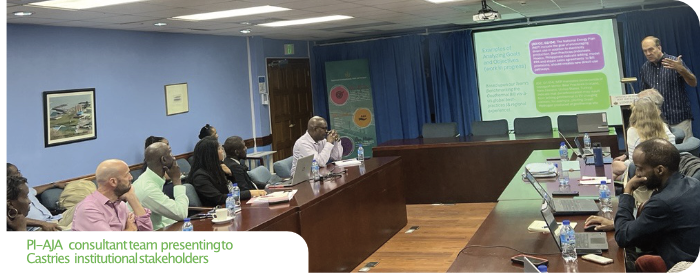
The consultative process was led by the hired consultant team, PI-AJA -a joint venture between Partnership International, Inc. and Arthur John Armstrong, PC. The experts conducted in-person sessions at the DIPT’s Conference Room in late February to provide project updates and gather initial feedback on the proposed policy framework.
This was followed by a comprehensive Policy Validation Workshop on March 23, 2026, to refine the legislative structure before finalizing the drafting instructions package.
The proposed Geothermal Resource Development Bill will create a transparent and stable environment for investment in home-grown, clean energy. Key pillars of the legislation discussed during the PI-AJA presentations include:
The feedback received from stakeholders is being directly incorporated into the final policy recommendations to ensure the legislation is both practical and inclusive.
By harnessing geothermal potential, Saint Lucia aims to reduce its dependence on imported fossil fuels and transition toward a more resilient, self-sufficient energy grid.
In order to undertake exploratory drilling in the communities, existing roads have to be expanded and improved, well pads constructed and water supply systems installed. The tender for these civil works was launched by DIPT in May of 2025. This tender process was terminated in January 2026 at the last stage of the evaluation process, i.e. evaluation of the financial proposal, primarily due to an abnormally high tender price.
As a countermeasure against receipt of abnormally high tender prices and to encourage wider participation in the process, the Civil Works package was reorganised into three (3) Lots: Lot 1: Access Roads to Project Sites; Lot 2: Well Pads and Storage Site and Lot 3: Water Supply Systems and relaunched in February of 2026. The deadline for submission of bids was set for March 25, 2026.
This relaunch has impacted the implementation schedule of the RESDP with a delay of approximately nine (9) months. To reduce the impact on the project’s overall timeline, i.e. the critical path, the RESDP has programmed for Civil Works and Drilling activities to be implemented concurrently at different sites.
RESDP Facilitates Stakeholder Consultation Meetings in February
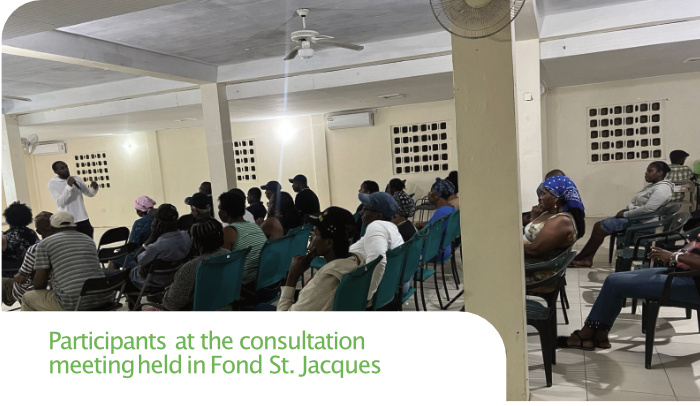
During the month of February, a series of community consultation meetings facilitated by the RESDP were held in the drilling communities of Saltibus, Belle Plaine, and Fond St. Jacques and institutional consultation meetings in Castries and Soufriere. These engagements formed part of the project’s ongoing commitment to transparency, inclusive participation an community engagement, as preparations for civil works and exploratory drilling progress.
The primary purpose of the consultations was to provide stakeholders with updates on the project’s overall progress and to discuss the policy direction for the development of a Geothermal Bill. During the project progress section, consultants from the PIU provided presentations on key financial, social, environmental, technical and procurement matters. Of note was the presentation on involuntary resettlement – compensation and upcoming house construction.
A limited open market approach will be utilized for the selection of an individual Consultant to conduct nesting bird survey and tree clearing activities.
View Full DetailsRequest for Bids Selection method is to be utilized to engage a Contractor to drilling of 3 exploratory wells.
View Full DetailsEngagement of a Consultant to prepare the Drafting Instructions and to consolidate existing policies, for submission to legal counsel for the establishment of the legislative and regulatory framework
View Full DetailsRequest for Bids Selection method to engage Contractors to prepare three drilling sites and construction of drill pads.
View Full Details

Project Implementation Unit
Renewable Energy Sector Development Project
Energy and Public Utilities Division
Sir Stanislaus James Building, Waterfront
Castries


Windia Jaunai
Community Liaison Officer
Project Implementation Unit
Renewable Energy Sector Development Project
Sir Stanislaus James Building, Waterfront
Castries

